
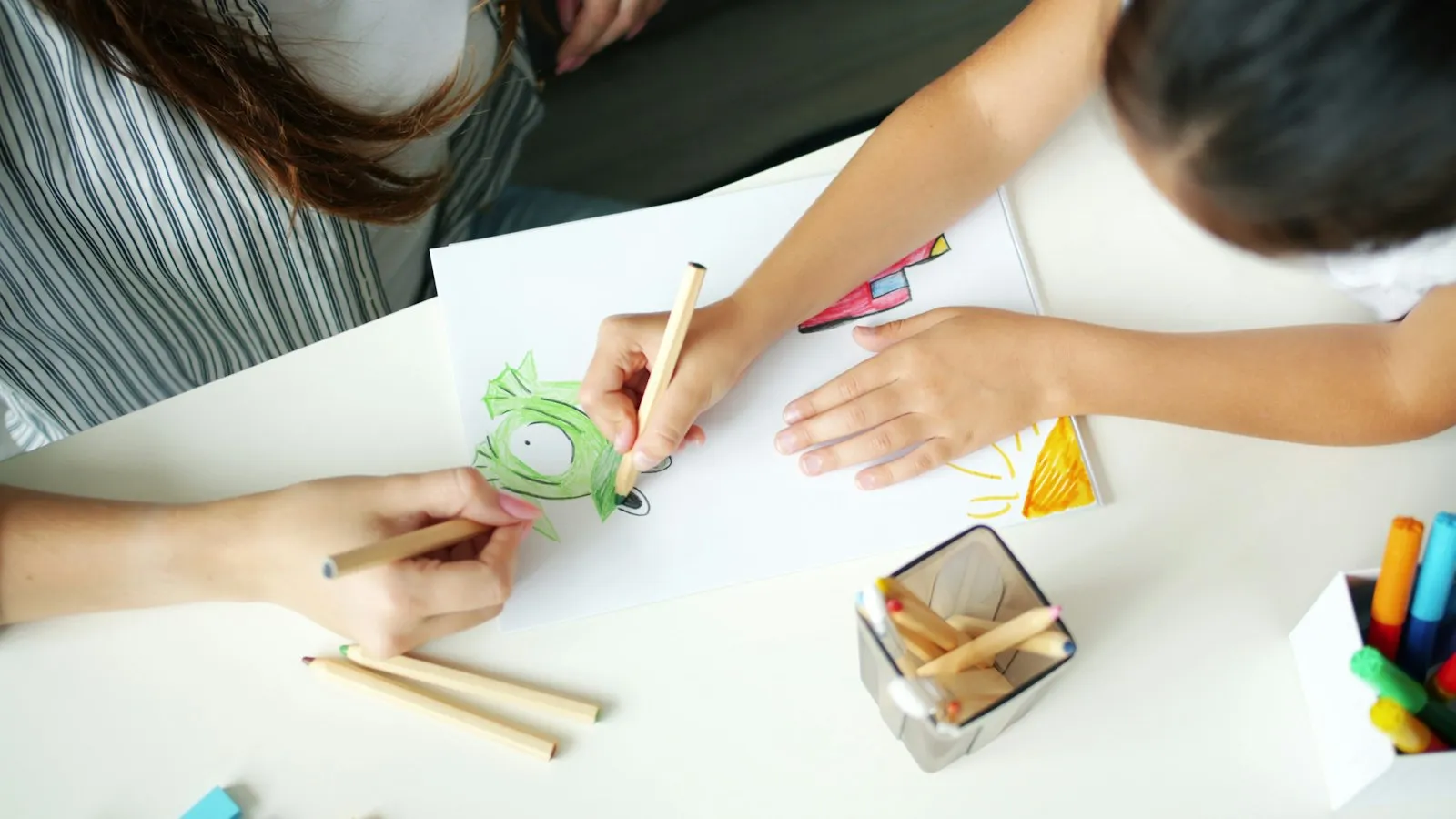
Play is a child’s language
Adults talk about their feelings. Children – especially younger ones – show them through play. The doll that is “afraid of the dark”, the car that “always crashes”, the drawing full of black: these are messages.
What you may notice
- Recurring themes in play (hospital, fights, getting lost)
- Sudden changes – a child who loved building now only knocks things down
- Avoiding certain toys or roles
How to talk through play
- Play on the floor, at your child’s level.
- Describe rather than ask: “Teddy looks sad.”
- Let your child lead – don’t correct the story.
- Name feelings: “It seems the bunny is angry.”
When to seek support?
If play keeps returning to the same difficult theme, if your child is constantly upset, or if they changed after an event (divorce, loss, moving), play-based counselling can help.